
Blog
Modern life runs on electricity — and once you step outside the comfort of home or office, access to 220V AC becomes a luxury. For road trips, outdoor camping, or mobile workstations, a car inverter becomes an essential accessory.
Today, we’re taking a detailed teardown look at the Xiaomi Mijia Car Inverter, a compact, thermos-shaped device that converts a vehicle’s 12V DC power into usable 220V AC output. Beyond its stylish appearance and Xiaomi-style minimalism, this device also includes a built-in USB charging module for everyday convenience.
This teardown explores the inverter’s hardware architecture, internal layout, thermal engineering, and component selection, offering insights into how such consumer-grade power devices are designed and built.
1. 📦 First Impressions & Exterior Design
The Mijia inverter continues Xiaomi’s signature packaging style: simple, clean, and highly space-efficient.
Packaging highlights:
- One for the boost (step-up) stage
- One for the output modulation stage

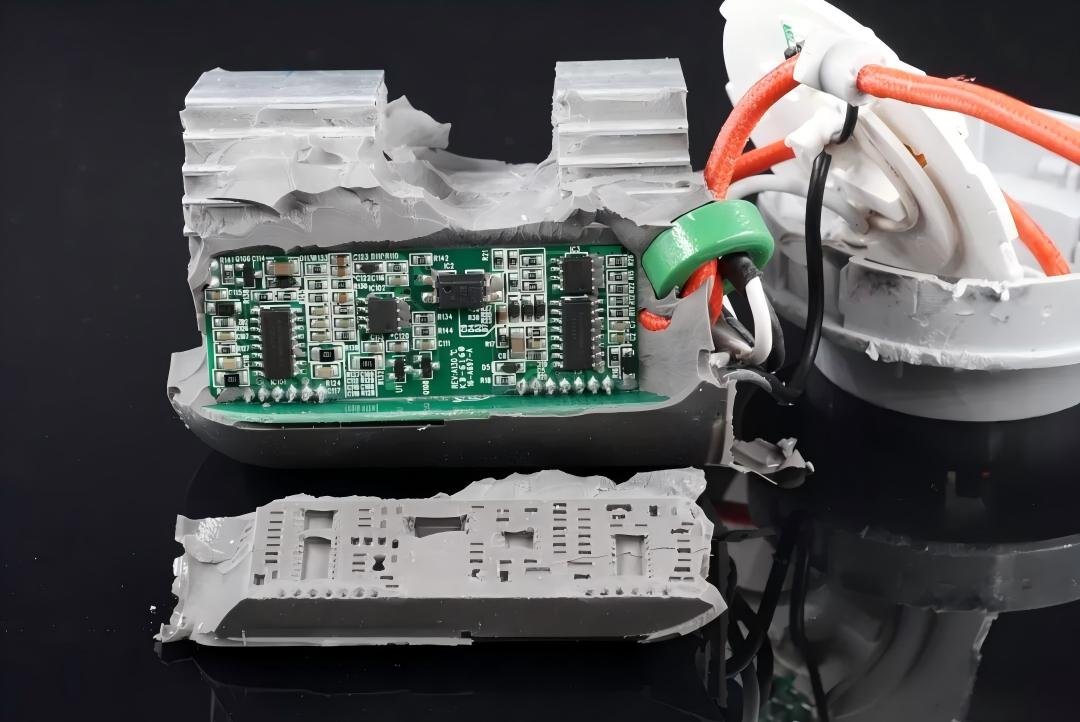
Between them is the main step-up transformer.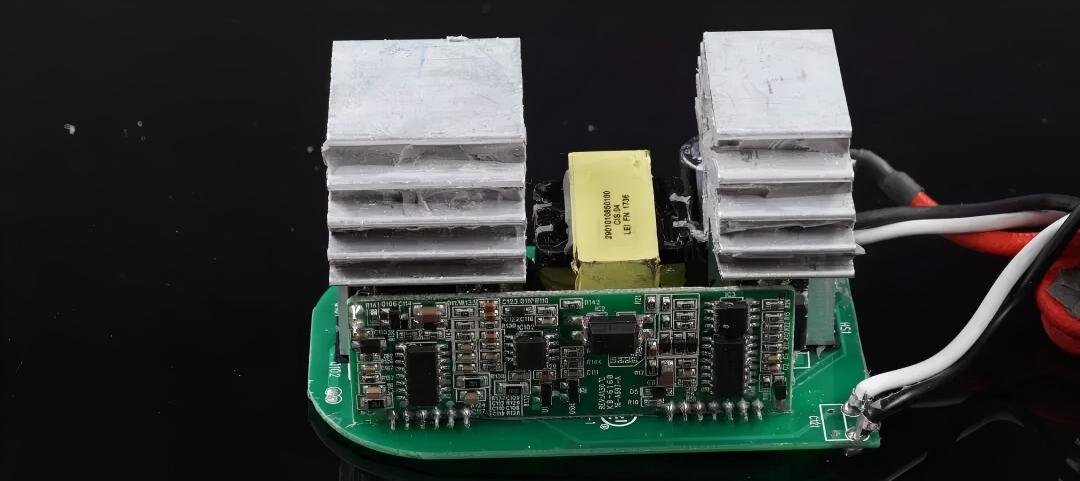
A small driver board on the side manages MOSFET control.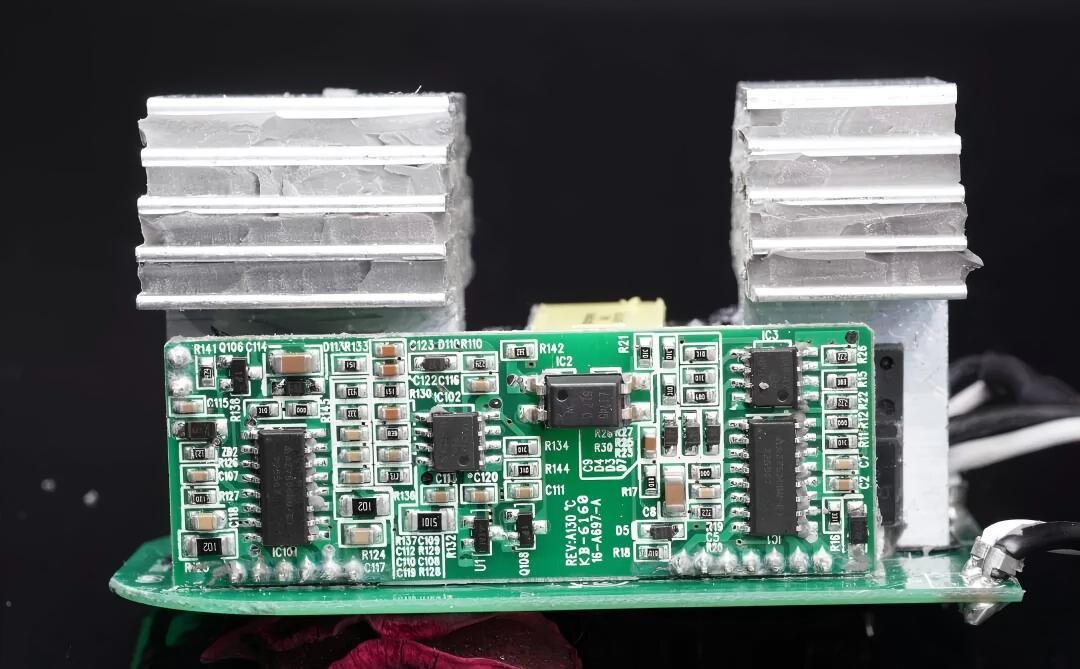
4.4 Control Logic
Both sides of the system use a familiar power control scheme:
- KA7500 PWM controller + LM358 operational amplifier
- Left side KA7500: AC output modulation
- Right side KA7500: driving MOSFETs for DC step-up

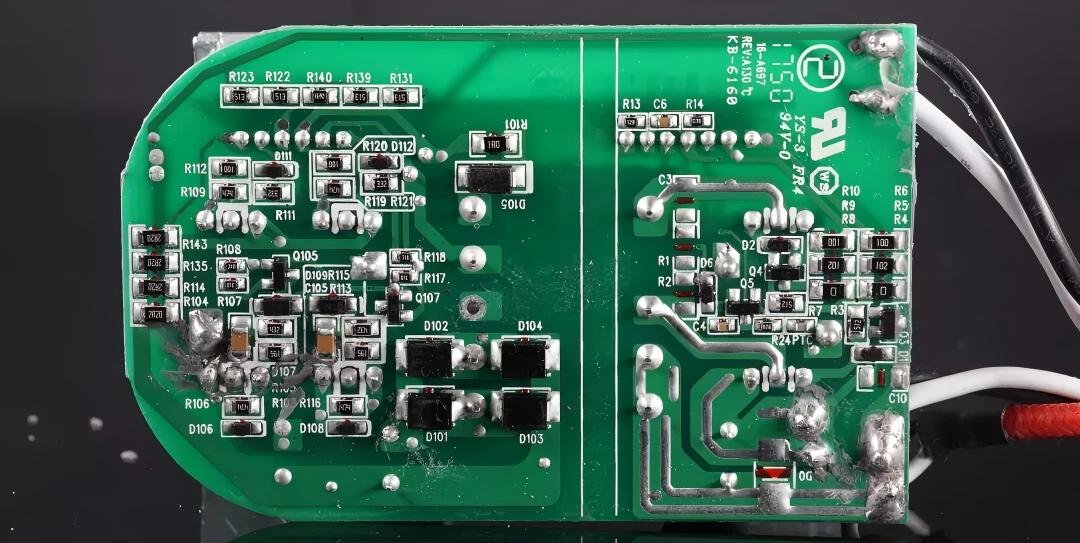
This confirms the inverter uses a “modified sine wave” design, widely adopted for mid-range consumer inverters.
Bridge rectifier:
- Four diodes on the back form the rectification network
Isolation between primary and secondary is achieved with an opto-coupler.
4.5 MOSFET & Component Selection
- Primary boost MOSFETs: SIF110N060 from SINFONET Semi

- Output-stage MOSFETs: KODENSHI SMK1060G
- Capacitors from Danyang Farah brand
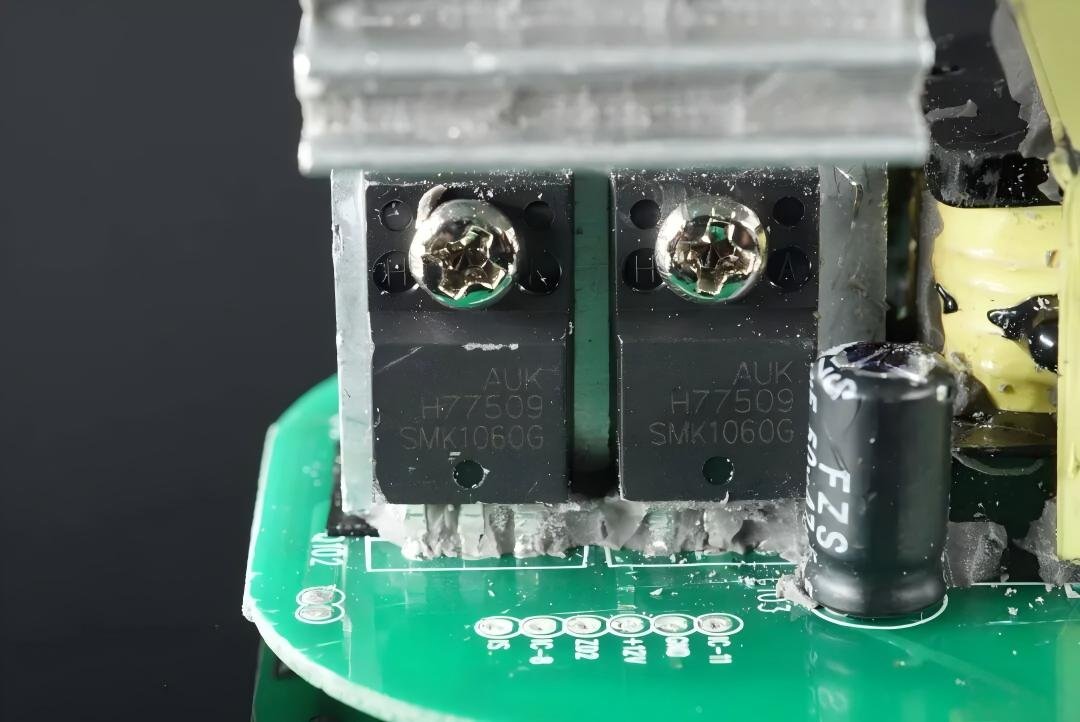
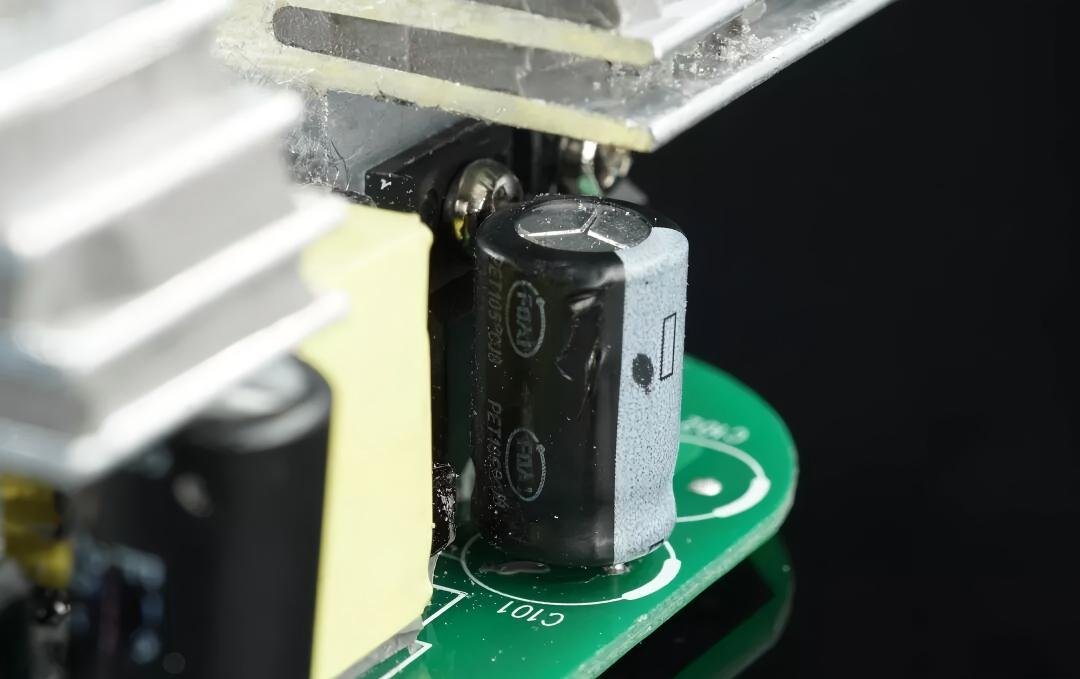
Component layout is clean, spaced for heat flow, and optimized for durability.
5. 🔚 Fully Disassembled Overview
The final teardown reveals a well-organized internal architecture with:
- Full potting material
- Dual heat sinks
- Boost stage + transformer
- Output modulation stage
- USB charging module
- EMI filtering
- Quality capacitors and MOSFETs
6. 📝 Final Thoughts
The teardown confirms that the Mijia Car Inverter, despite its compact and consumer-friendly appearance, is built on mature and reliable circuitry. The modified-sine-wave design uses well-known components like KA7500, LM358, standard MOSFET arrays, and robust EMI filtering.
The most impressive engineering choice is the full thermal potting, which significantly improves:
- Heat dissipation
- Vibration resistance
- Long-term reliability
The inclusion of USB charging further enhances real-world usability.
This teardown leads to one clear conclusion:
It’s not high-tech, but it is well-designed, well-built, and thoughtfully engineered — a solid example of how Chinese consumer hardware continues to improve in quality.
7. 🚀 Turning Teardown Insights Into Better Hardware Products
Building a reliable power device — or any consumer hardware — requires a deep understanding of:
- Thermal design
- Electrical architecture
- Component selection
- Structural engineering
- Manufacturing readiness
If you’re developing a new hardware product — inverter, power bank, embedded device, or consumer electronics — we WokooDesign provide:
- Product design & feasibility consulting
- Electronics design (power circuits, MCU, PCB layout)
- Industrial and mechanical design
- Prototype building & verification testing
- Mass-production support and supply chain guidance
By applying the same engineering principles seen inside Xiaomi’s inverter, we help create hardware that is stable, elegant, and ready for real-world challenges.
- Minimalist outer box design
- Neatly organized internal layout with a rigid white protective tray
- The inverter itself resembles a small water bottle — perfectly sized to fit into a vehicle’s cup holder.
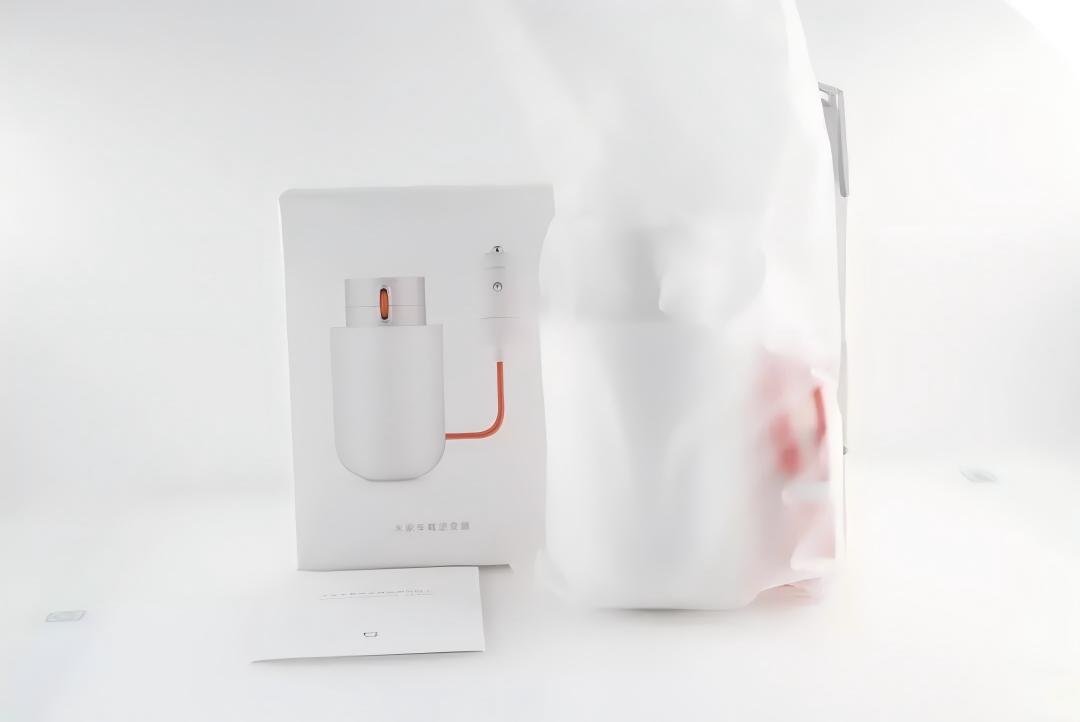

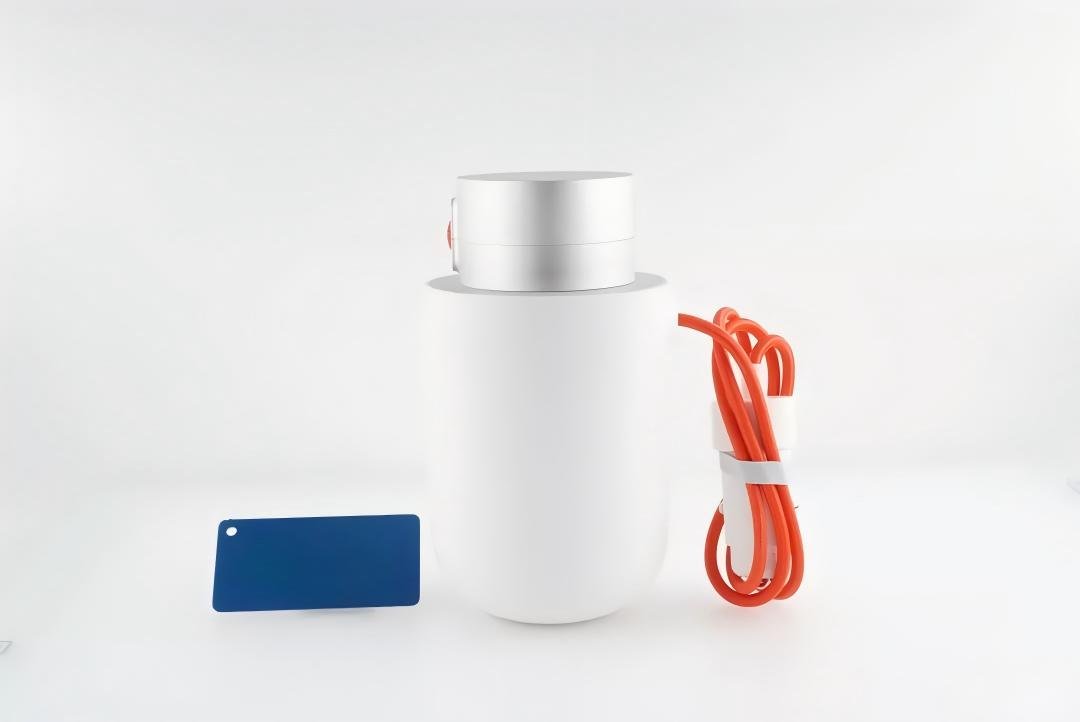
Key exterior details:
- Soft rubber base with printed specifications
- A twist-to-open top revealing the 220V AC output socket, two USB ports conveniently built into the lid
- Total weight: 612 grams
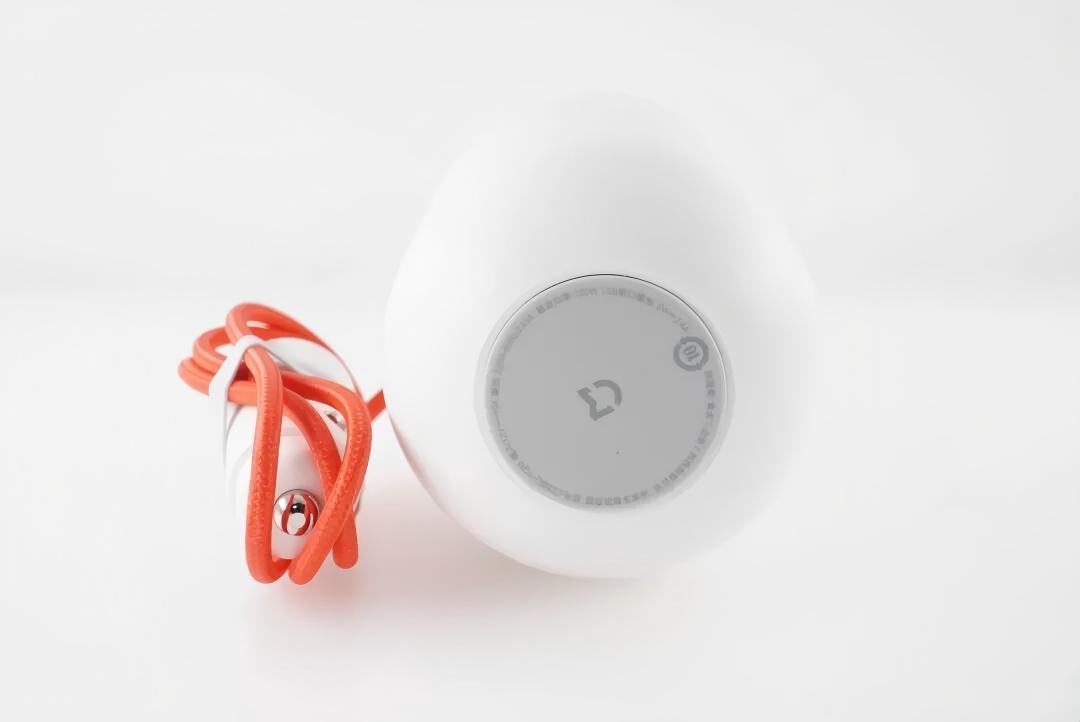
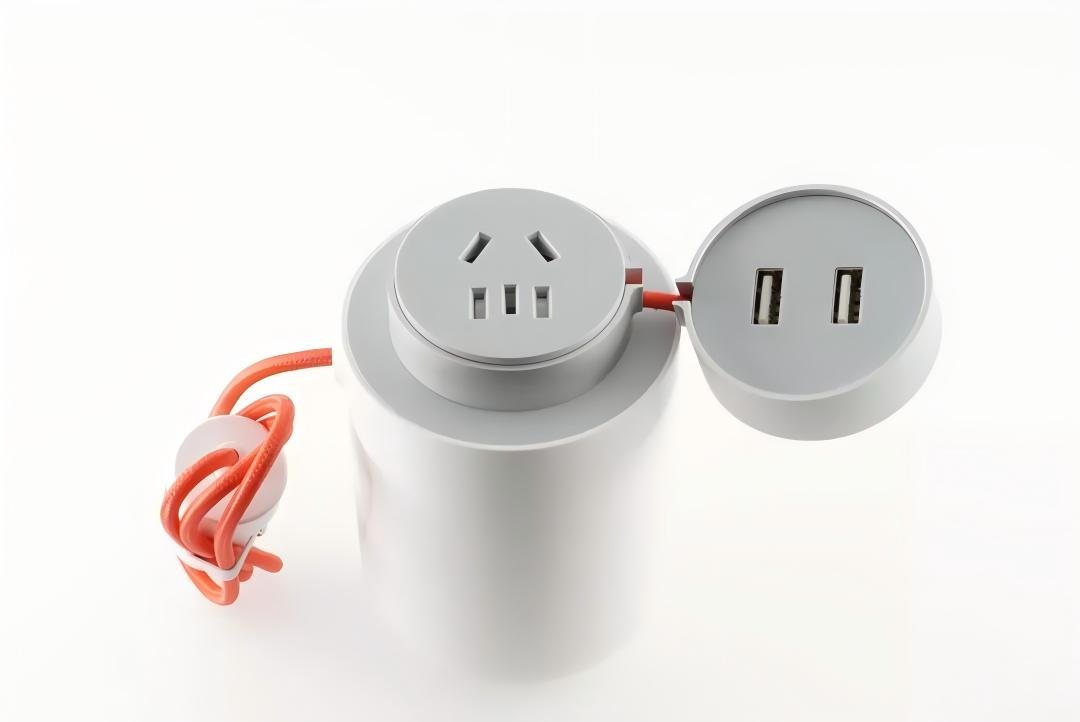
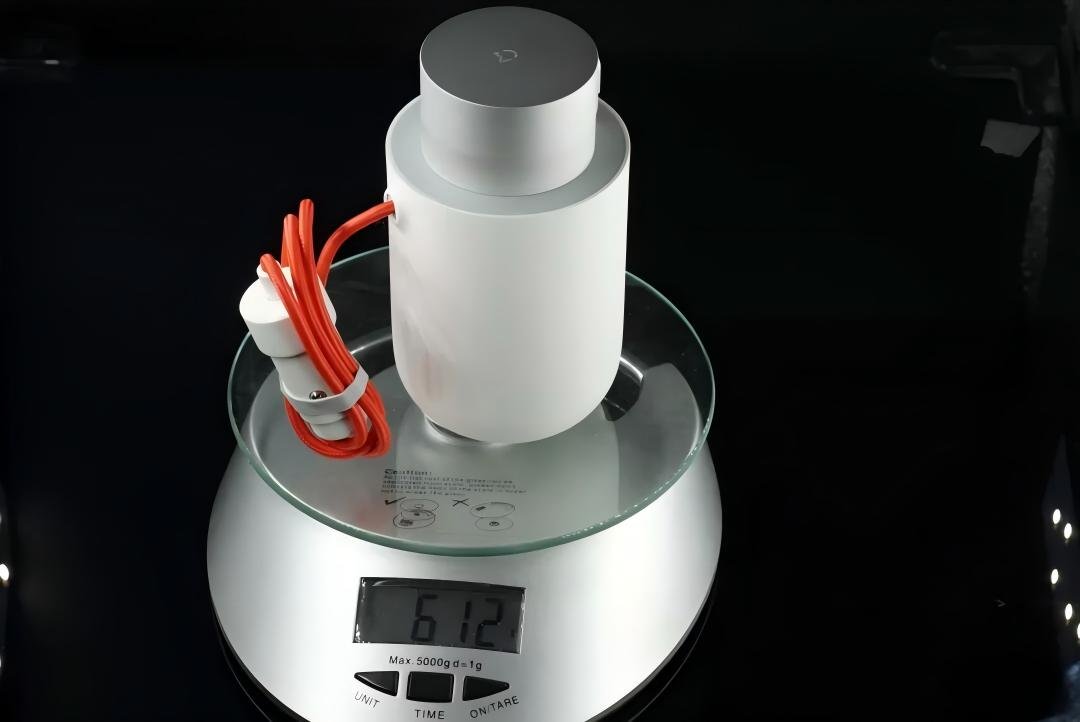
The design is practical, compact, and car-friendly.
2. 🔌 Functional Testing Before Teardown
Before opening the device, several functional tests were conducted.
USB Performance
Using the ChargerLab POWER-Z FL001 SUPER analyzer:
- Maximum output: 3.4A
- Supports Apple 2.4A fast-charging protocol
- No support for other fast-charge standards
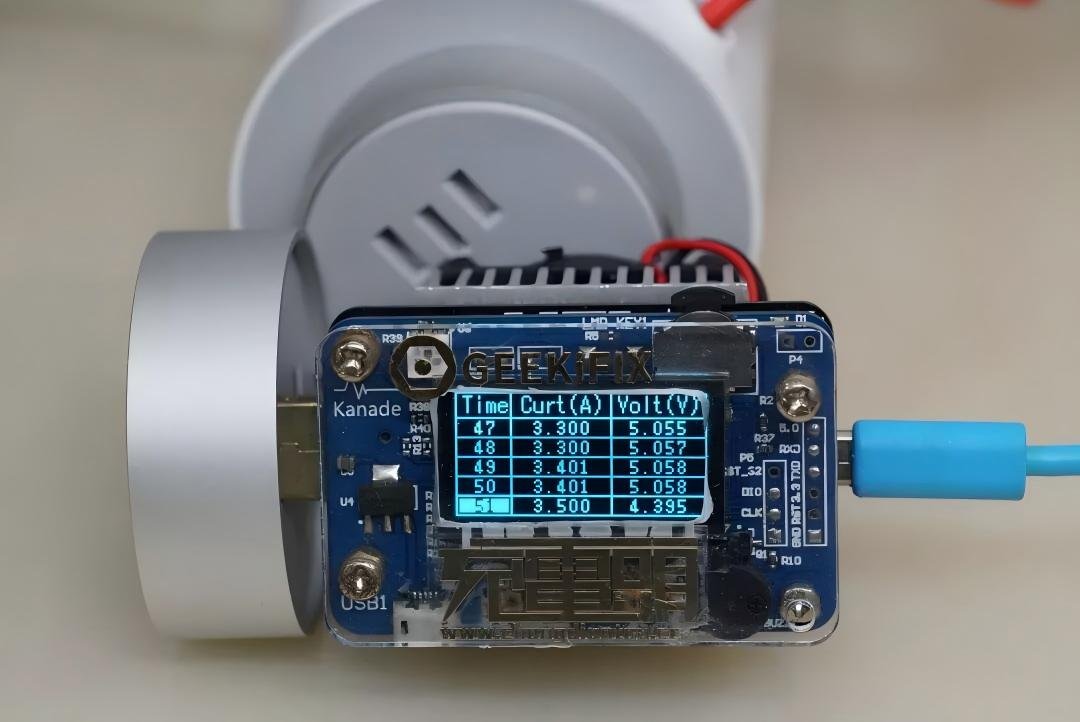
 fast-charging protocol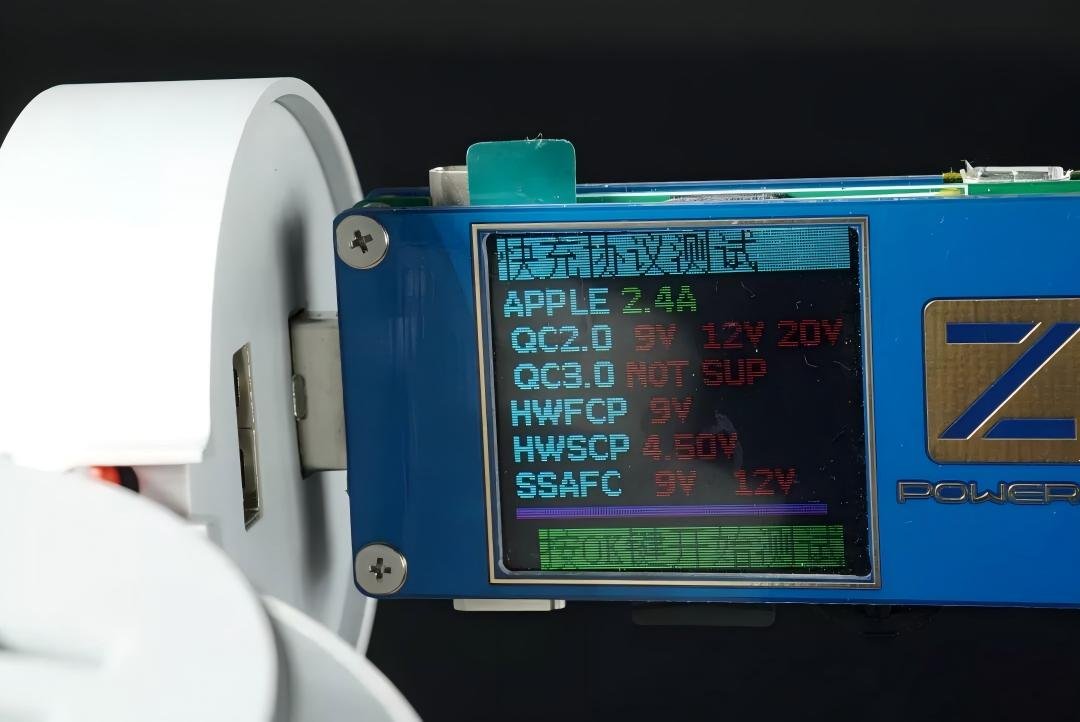
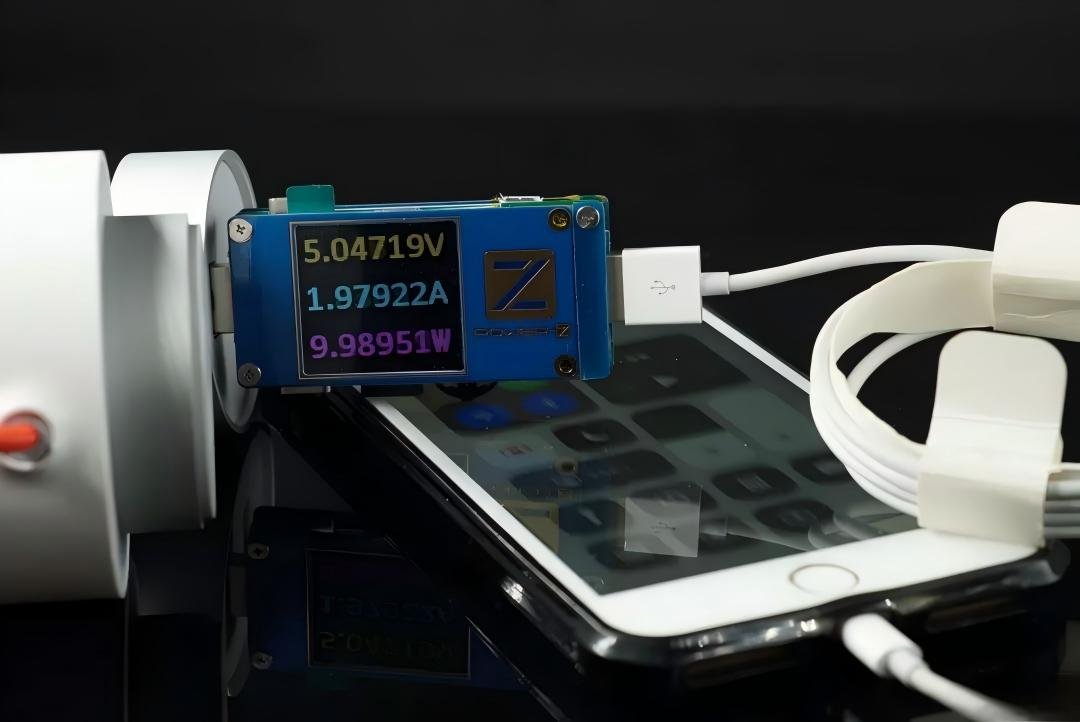
Charging experiments:
- iPhone 7 Plus charging at 2A
- Simultaneous USB output supported
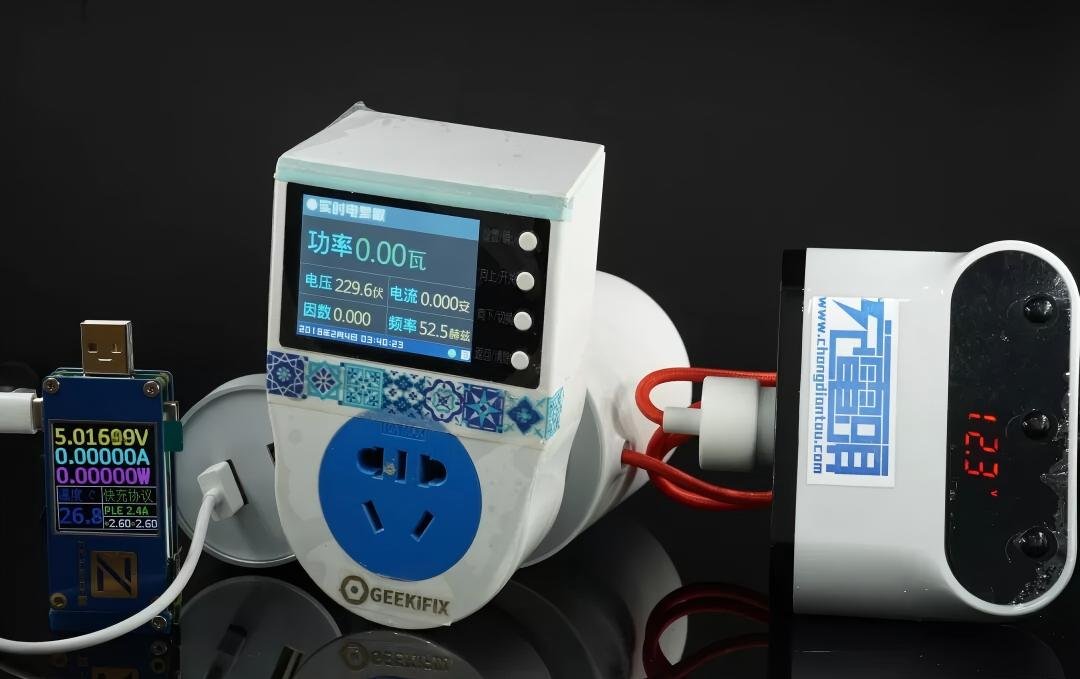
AC Output Performance
- Output voltage: 228.6V
- Output frequency: 52.7Hz
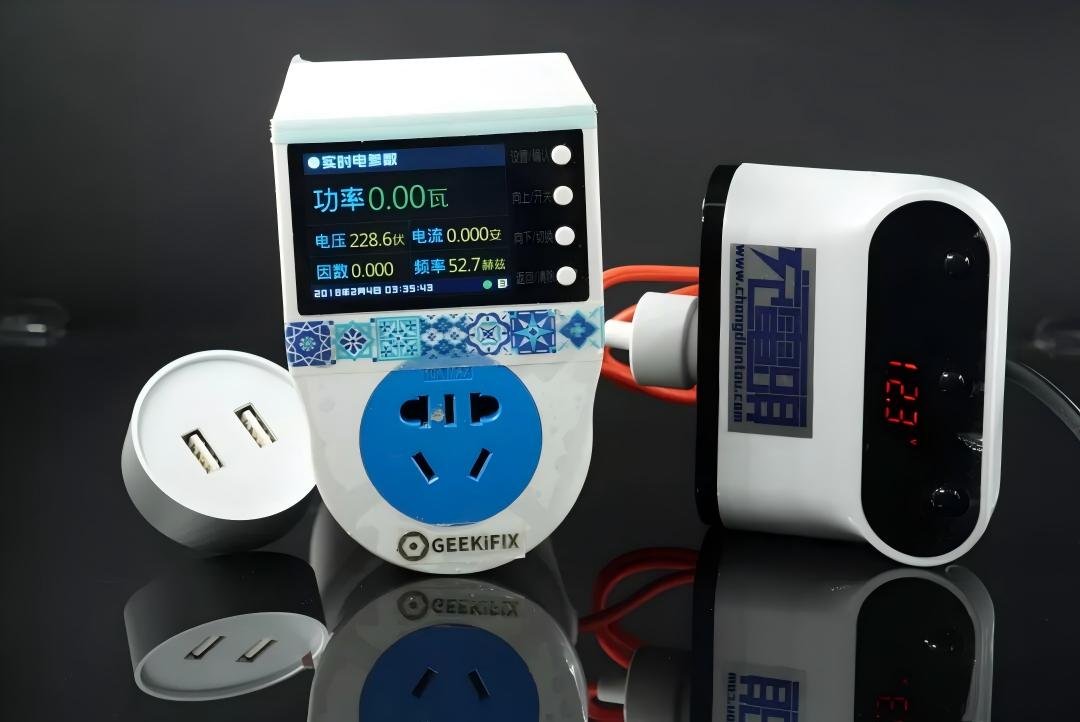
Everything worked as expected for a modified-sine-wave inverter.
3. 🛠 Full Teardown: Inside the Mijia Car Inverter
After performance testing, we move to the teardown — and Xiaomi certainly didn’t make it easy.
Opening the Shell
Tools needed: a saw + soldering iron to soften the casing.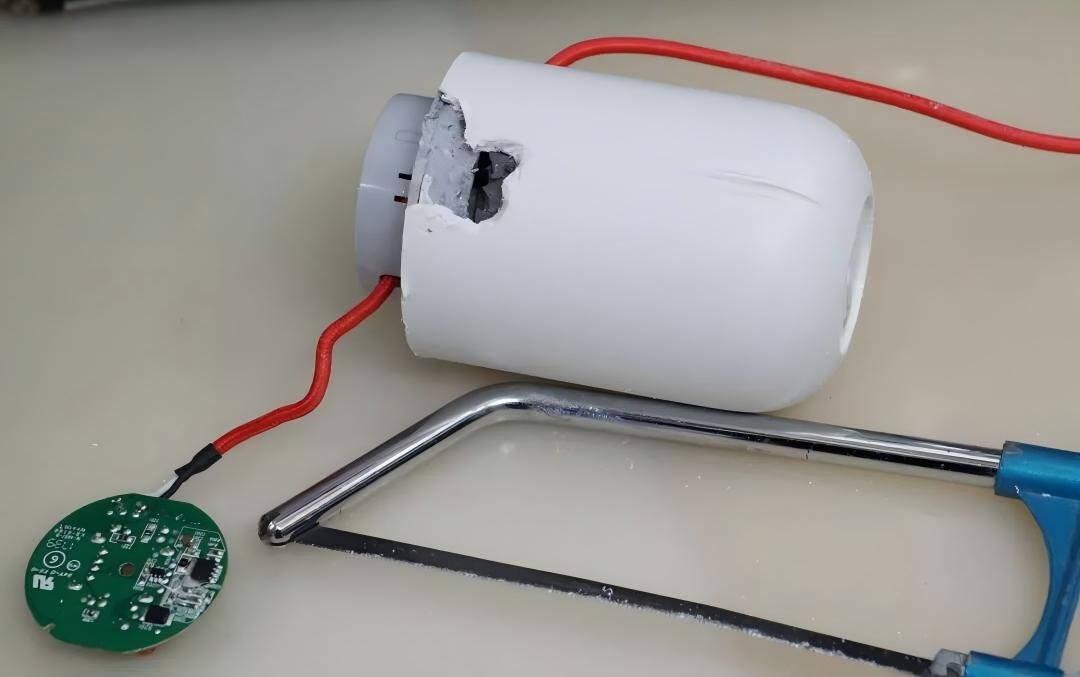
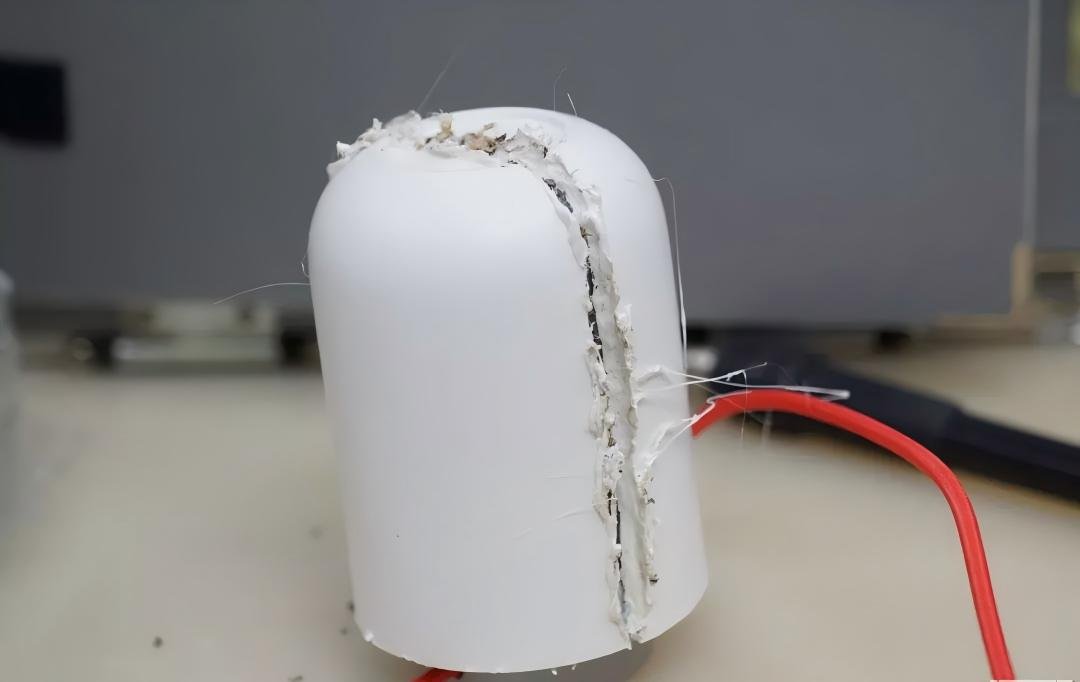
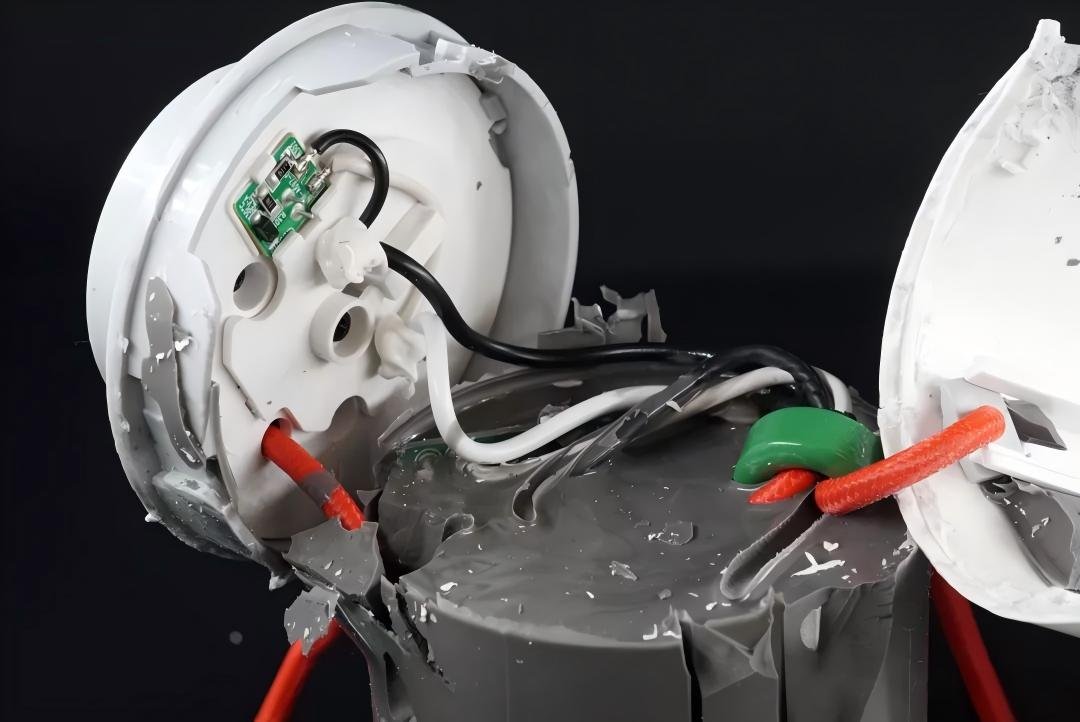
Inside, the entire inverter is filled with thermal conductive potting compound:
- Enhances heat dissipation
- Improves structural rigidity
- Reduces vibration
- Explains the device’s substantial weight
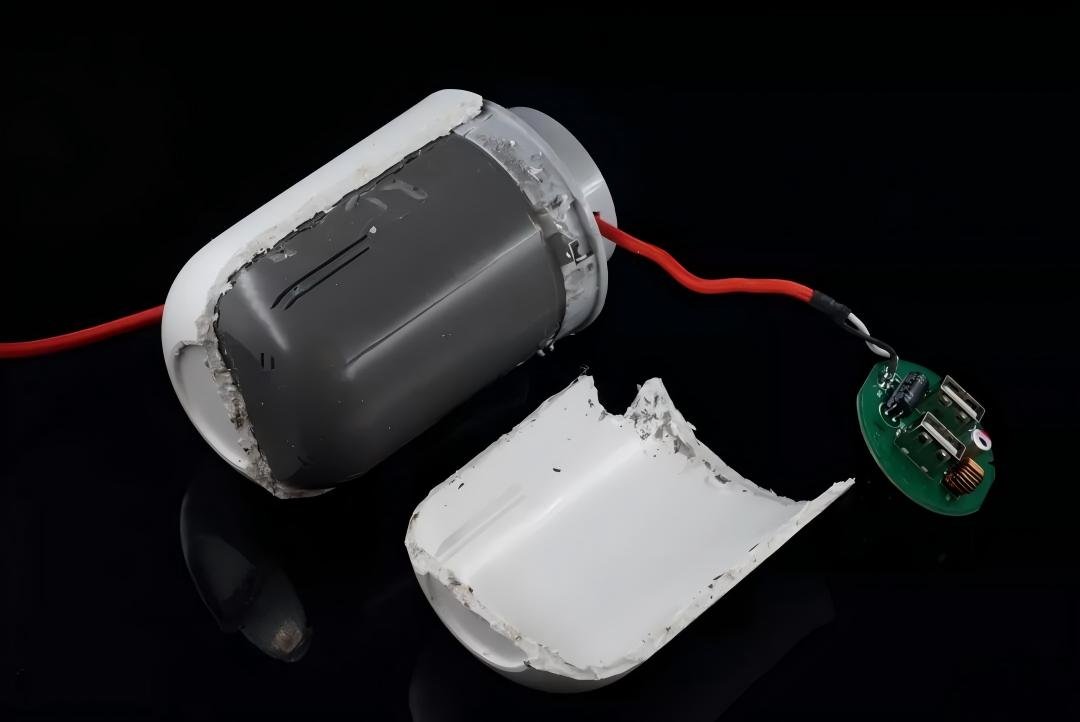
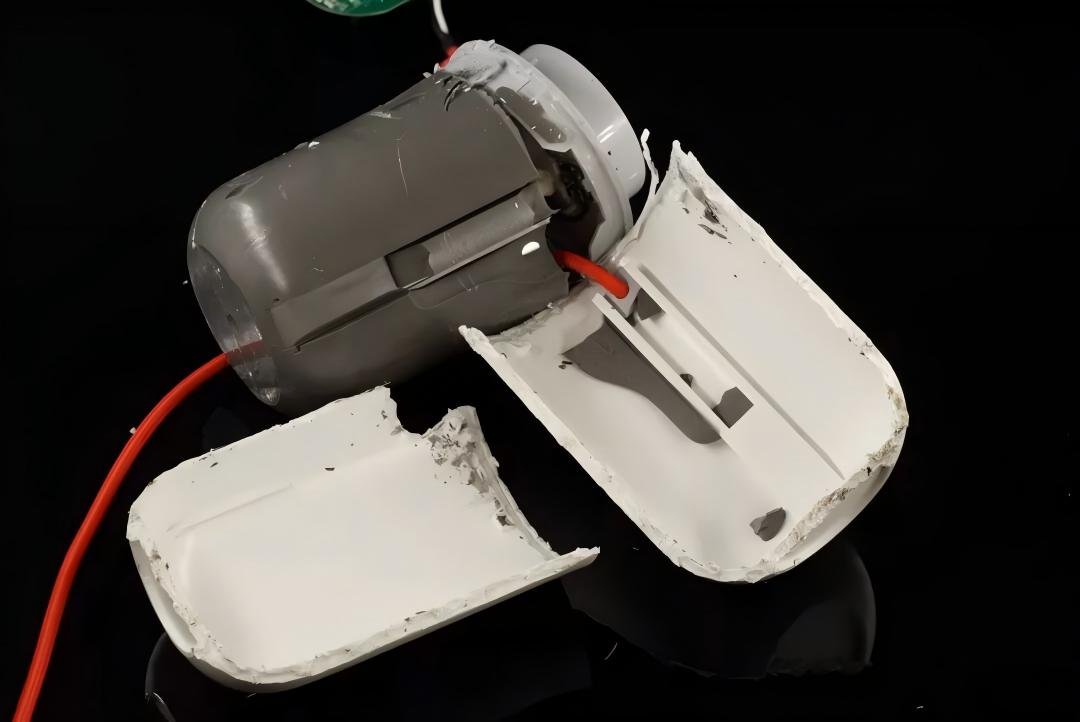
The potting material required significant effort to remove.
4. 🔍 Internal Architecture Breakdown
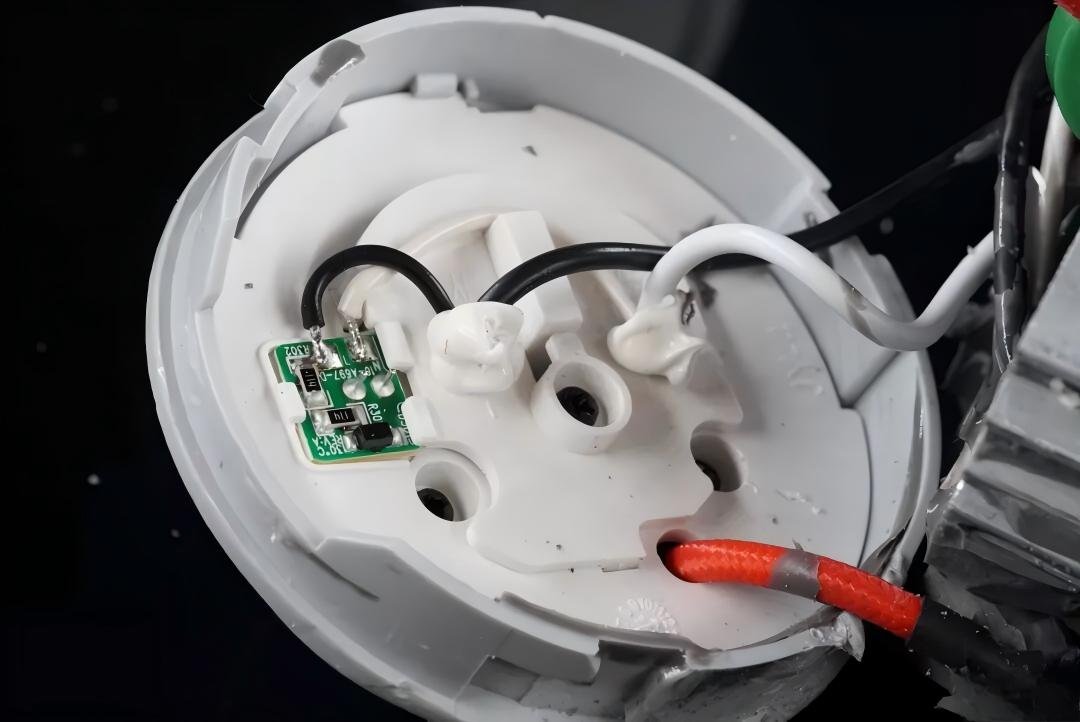
4.1 Input Section
- Thick input wires with a magnetic ring for EMI suppression
- Primary filtering capacitor
- Clean soldering with silicone reinforcement
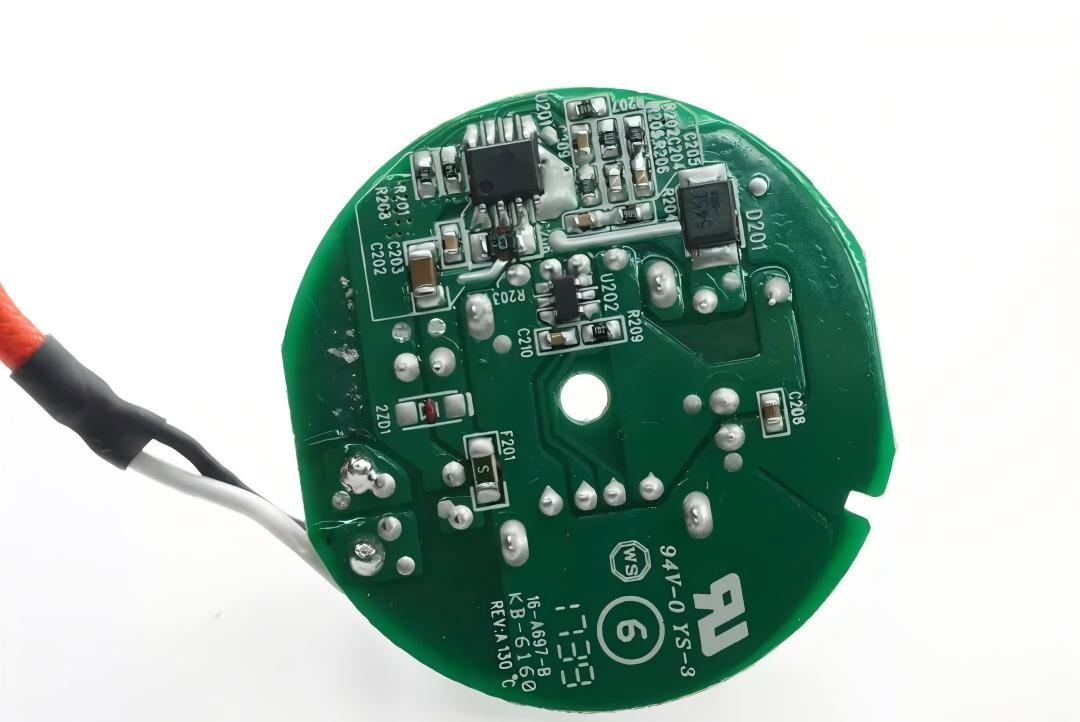
4.2 USB Module (Built into the Lid)
Disassembling the inverter’s cover reveals a working principle similar to that of a car charger.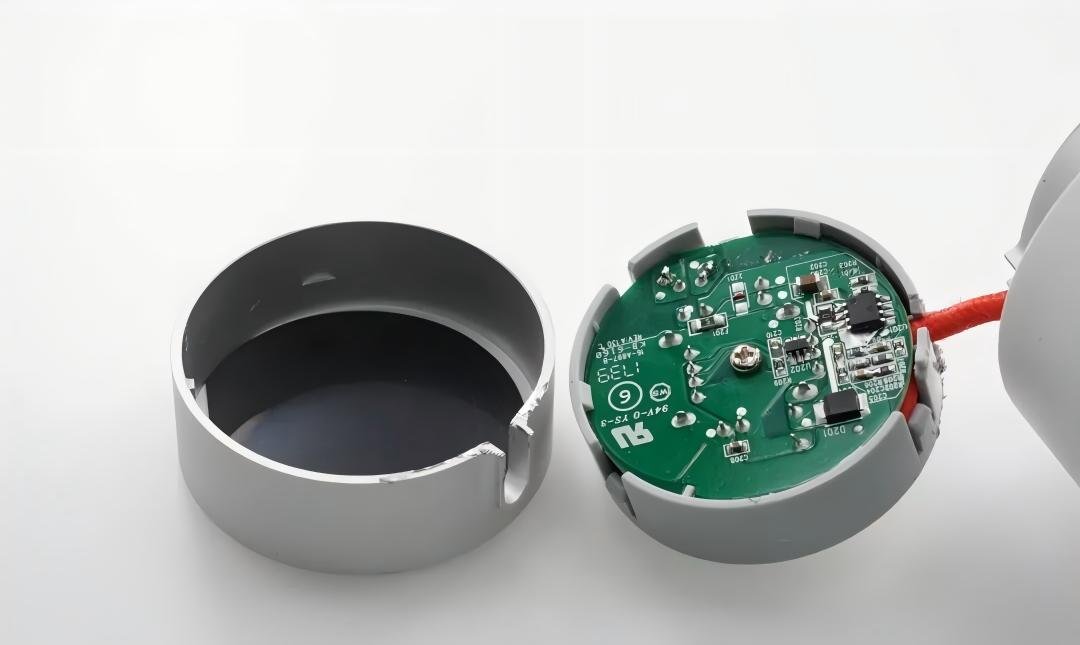
The lid is made of aluminum alloy, and the inside is plastic.
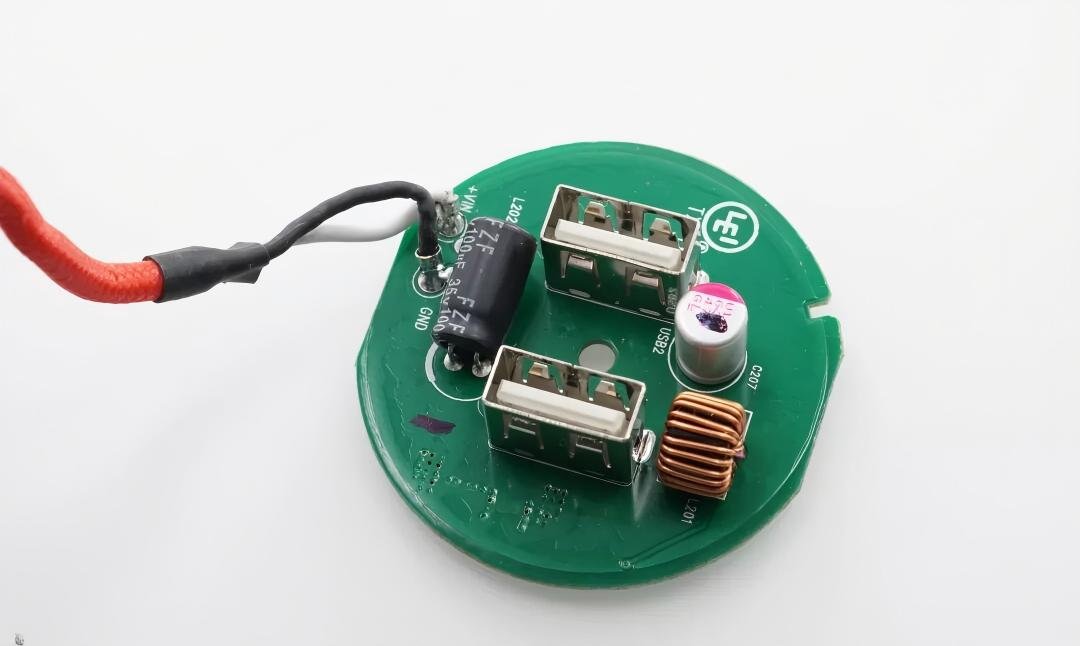
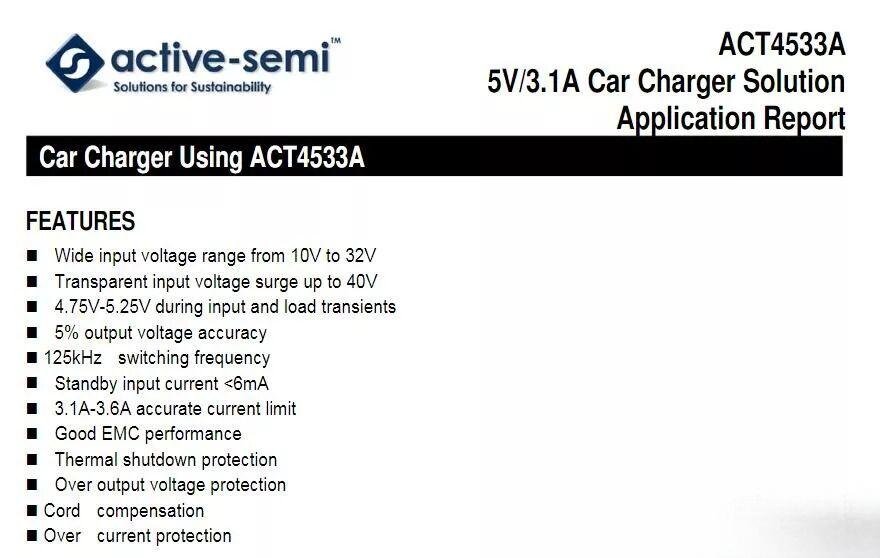
The USB section resembles a compact car charger:
- One electrolytic input capacitor, one solid-state output capacitor

- Uses ACT4533 + dual-protocol recognition IC

4.3 Power Conversion Stage
After removing the cap, the difficult process of removing the adhesive begins.
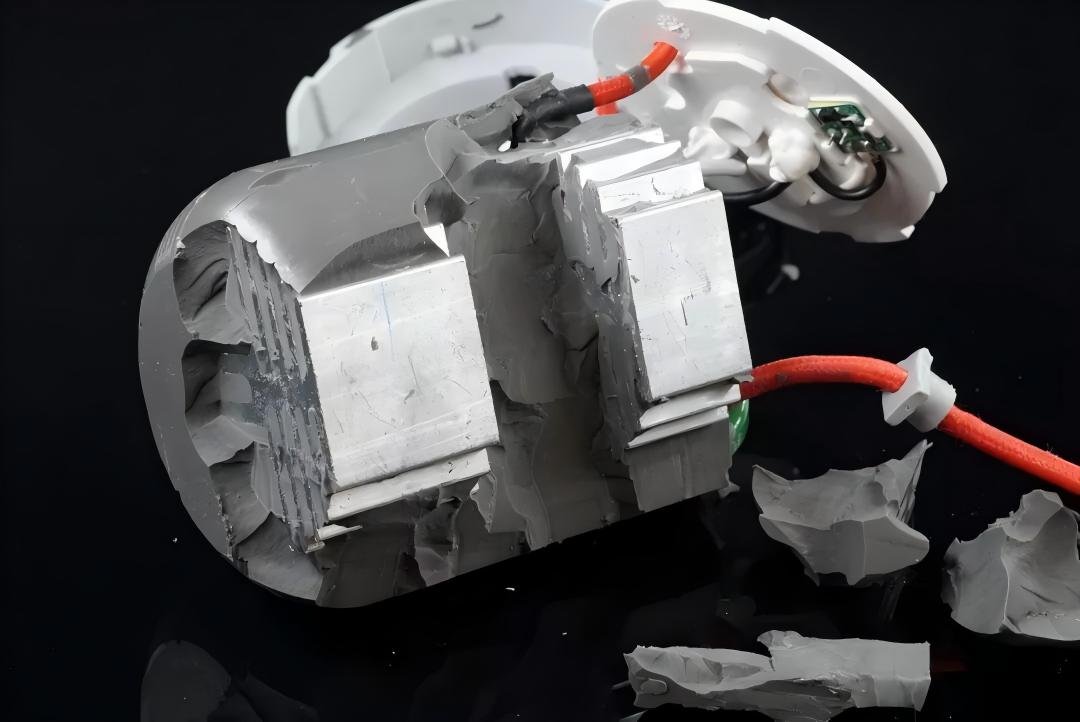
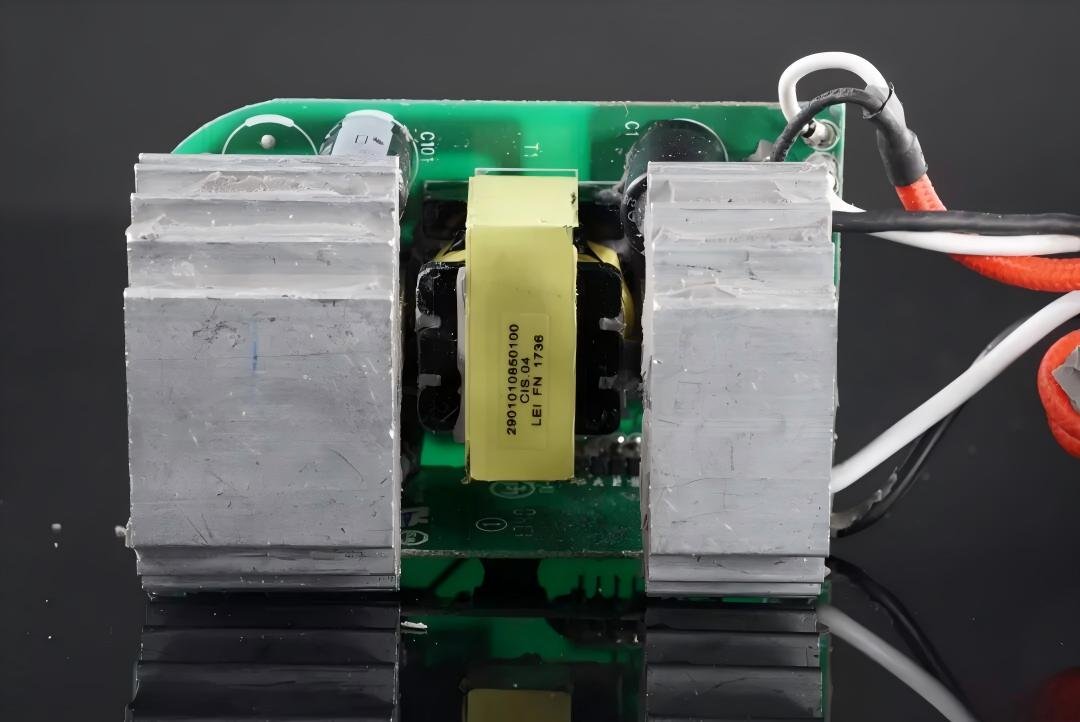
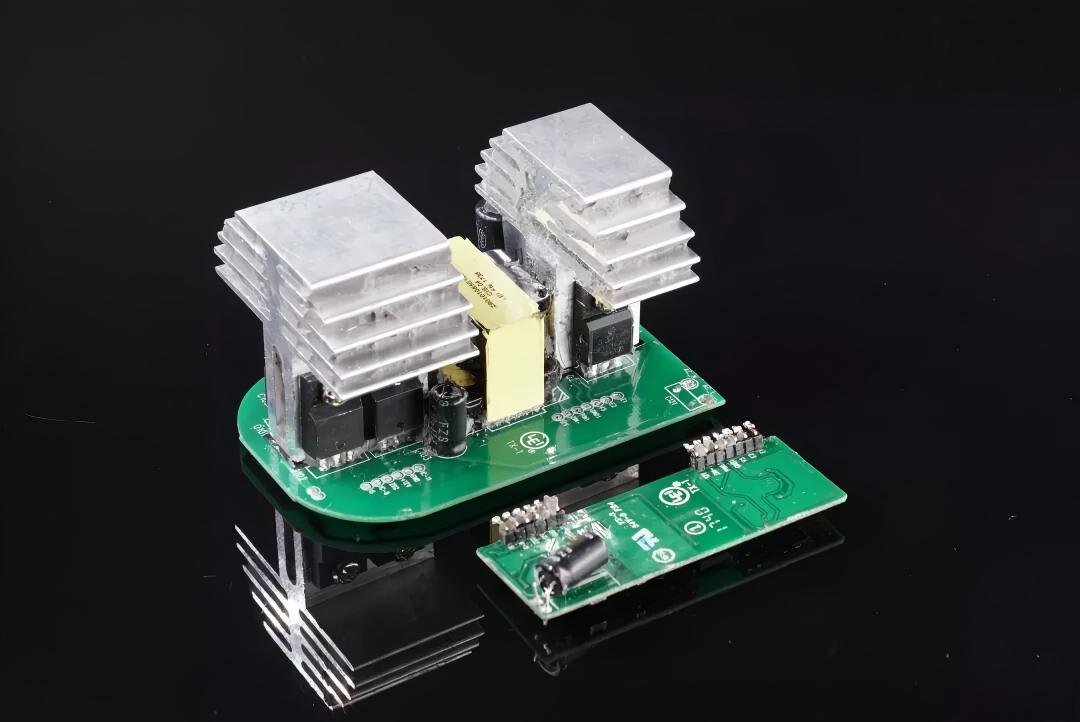
Two major aluminum heat sinks sit on each side:
- One for the boost (step-up) stage
- One for the output modulation stage
Between them is the main step-up transformer.
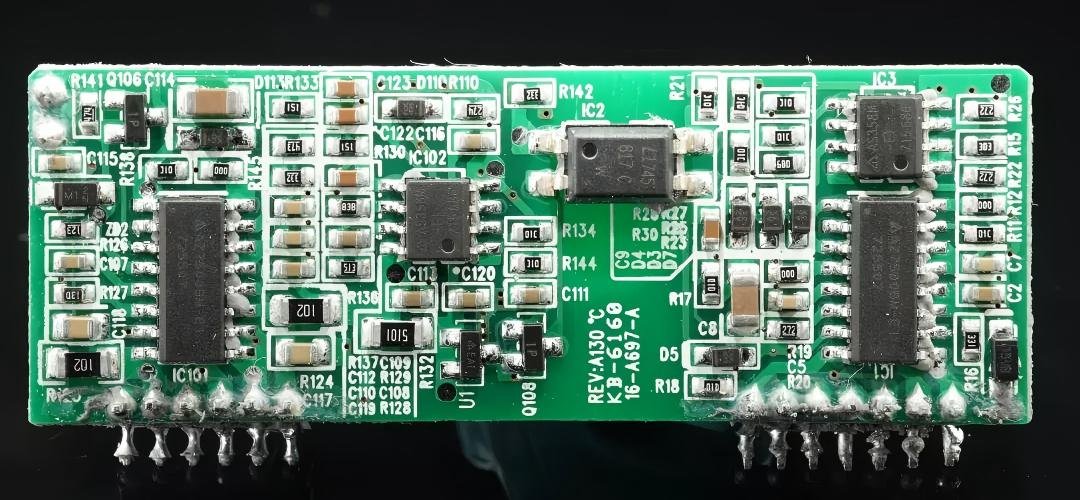
A small driver board on the side manages MOSFET control.
4.4 Control Logic
Both sides of the system use a familiar power control scheme:
- KA7500 PWM controller + LM358 operational amplifier
- Left side KA7500: AC output modulation
- Right side KA7500: driving MOSFETs for DC step-up
This confirms the inverter uses a “modified sine wave” design, widely adopted for mid-range consumer inverters.
Bridge rectifier:
- Four diodes on the back form the rectification network
Isolation between primary and secondary is achieved with an opto-coupler.
4.5 MOSFET & Component Selection
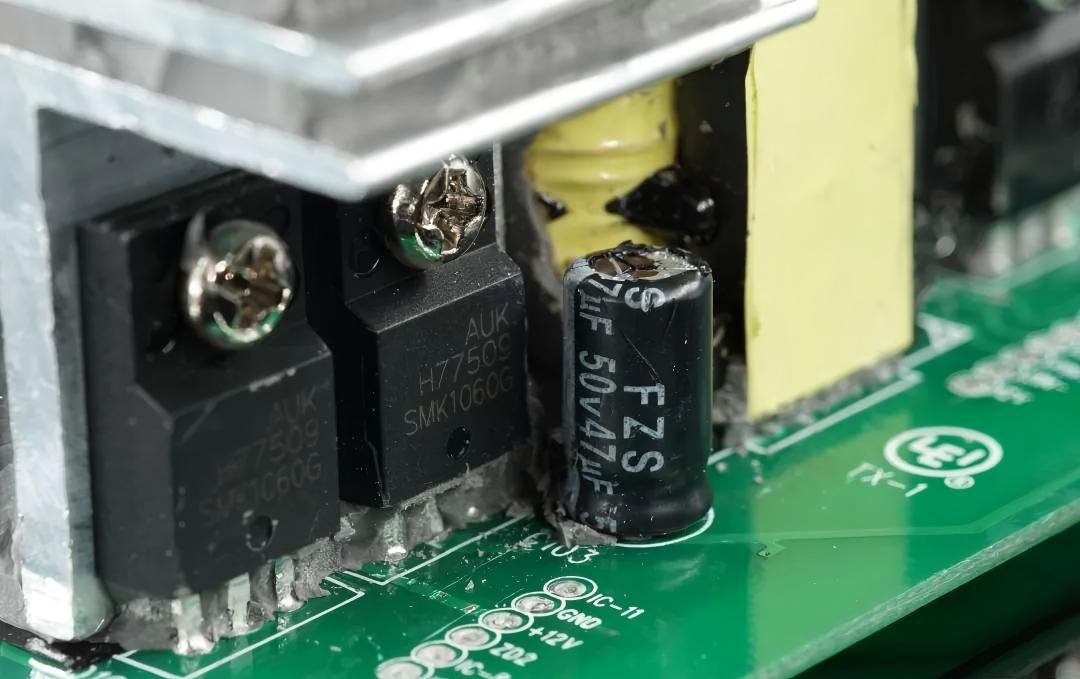
- Primary boost MOSFETs: SIF110N060 from SINFONET Semi
- Output-stage MOSFETs: KODENSHI SMK1060G
- Capacitors from Danyang Farah brand
Component layout is clean, spaced for heat flow, and optimized for durability.
5. 🔚 Fully Disassembled Overview
The final teardown reveals a well-organized internal architecture with:
- Full potting material
- Dual heat sinks
- Boost stage + transformer
- Output modulation stage
- USB charging module
- EMI filtering
- Quality capacitors and MOSFETs
6. 📝 Final Thoughts
The teardown confirms that the Mijia Car Inverter, despite its compact and consumer-friendly appearance, is built on mature and reliable circuitry. The modified-sine-wave design uses well-known components like KA7500, LM358, standard MOSFET arrays, and robust EMI filtering.
The most impressive engineering choice is the full thermal potting, which significantly improves:
- Heat dissipation
- Vibration resistance
- Long-term reliability
The inclusion of USB charging further enhances real-world usability.
This teardown leads to one clear conclusion:
It’s not high-tech, but it is well-designed, well-built, and thoughtfully engineered — a solid example of how Chinese consumer hardware continues to improve in quality.
7. 🚀 Turning Teardown Insights Into Better Hardware Products
Building a reliable power device — or any consumer hardware — requires a deep understanding of:
- Thermal design
- Electrical architecture
- Component selection
- Structural engineering
- Manufacturing readiness
If you’re developing a new hardware product — inverter, power bank, embedded device, or consumer electronics — we WokooDesign provide:
- Product design & feasibility consulting
- Electronics design (power circuits, MCU, PCB layout)
- Industrial and mechanical design
- Prototype building & verification testing
- Mass-production support and supply chain guidance
By applying the same engineering principles seen inside Xiaomi’s inverter, we help create hardware that is stable, elegant, and ready for real-world challenges.